• About

Questions Are Power

Questions Are Power

Category Archives: Questions in Logic

Where are questions, a universal part of language, in logic?

tribute

29 Sunday Mar 2026

Posted by Andrew Nightingale in Questions in Logic

≈ Leave a comment

—The following is a tribute to my father, Kevin Barnhurst,

I decided to make a tribute to him.

Dad and I were working on this essay (http://journals.sagepub.com/doi/full/10.1177/1464884916689150) when he died.

Dad was a flawed human being, but one comfort is that I almost exclusively remember good things about him, and feel pleasure in remembering him. I know thats good for both of us. We were at odds a lot when I was a kid. I went through a different kind of school system engineered to dumb down the American population, and entered college a logical positivist by default, but underneath all that wash, I was deeply skeptical of my “education”. For dad his family didn’t trust his decision to enter college, and the situation was reversed. For him school was how to become educated, for me what education I have was a result of conversation (with him and many others). I probably would not have gone to college at all if dad hadn’t pushed me hard to apply. That was one of the strange things about dad, he was very forceful, and only made me more stubborn, but he softened later in life and knew how to make his force felt in a strangely soft way.

We kept a long tradition of holding protracted conversations in the evenings and into the night. I owe my intellectual development primarily to him, and it is strange how long it took me, all the way to the last few years of his life, to realize what a gift that was and to reach an understanding that allows respect his for work.

Vagueness in Mathematical Terms (reworked and more accessible)

Featured

Posted by Andrew Nightingale in Questions in Logic

≈ Leave a comment

Tags

consciousness, mathematics, philosophy, science

High Up (On Vagueness and Mathematics)

Imagine walking down Olympus Mons — the largest volcano in the solar system, on Mars. Its slopes are so gradual that you might walk for hours barely noticing the descent. At the top, you are clearly “high up.” At the bottom, you are clearly not. But somewhere in between, the description falters. You become unsure whether “high up” applies or not. That fuzzy middle zone is what philosophers call vagueness.

We can make this precise — or try to. Map the mountain onto a number line: 0 at the summit, 1 at the base. The set of points where you count as “high up” has a boundary. Call it sup — the least upper bound, the last point before “high up” runs out. The set of points where you count as “not high up” also has a boundary: inf, the greatest lower bound, the first point where “not high up” begins.

Now suppose — reasonably — that sup itself counts as “high up” (since every point below it does), and that inf counts as “not high up.” What happens when we ask how sup and inf relate to each other?

There are only three possibilities, and each one produces a contradiction:

  • If sup = inf, then that single point is both “high up” and “not high up.”
  • If sup > inf, then the real number line — which is dense, meaning there’s always another number between any two — guarantees a point z sitting between them. That point would be both “high up” (since it’s below sup) and “not high up” (since it’s above inf).
  • If inf > sup, the same logic applies in reverse.

The standard response is to blame the vague word. “High up” is imprecise — a folk term, not a technical one. Strip it away and mathematics, supposedly, is safe.

But stripping the vague term doesn’t solve the problem. It moves it.


Consider the wave theory of light. Its mathematical core — the equation governing refraction:

sin(α) / sin(β) = μ

— looks clean and precise. But the philosopher Mary Hesse pointed out that the equation, on its own, is ambiguous: it can be interpreted in multiple, entirely different ways. The symbols don’t come pre-labeled. Perhaps α and β aren’t angles of light at all — perhaps they’re the angles between the Pole Star and two planets at midnight. The mathematics would fit. Which interpretation is correct? The equation doesn’t say. Meaning doesn’t live in the symbols alone.

Vagueness and ambiguity are usually treated as distinct problems. Ambiguity means a word or expression has more than one possible meaning. Vagueness means a word has unclear edges — cases where it’s genuinely uncertain whether it applies. But consider: what if a word were both at once?

Thai has a word, krup, that technically means “yes” but functions more like a polite acknowledgment — because outright agreement can feel presumptuous, as if you’re confirming what the listener already knows. It occupies a middle space between assertion and non-assertion.

Now invent a word: snook. It means “tall” in some contexts and “not tall” in others. When applied to someone of borderline height — someone exactly at the edge of where “tall” is uncertain — is snook ambiguous, vague, or somehow both? Is there a vagueness between vagueness and ambiguity? If so, what does that do to the apparent clarity of mathematical symbols?


Even pure mathematics — mathematics with no interest in mountains or light — is soaked in vagueness. The discipline’s foundational concepts carry it: continuity, completeness, integral, limit. These are not casual approximations. They are the load-bearing terms of analysis, the branch of mathematics that underlies calculus.

And they are vague. Any careful textbook in real analysis will show you functions that slip through the formal definition of continuity — technically satisfying the definition while still behaving in ways the definition was meant to exclude. The definition doesn’t quite capture the intuition. The intuition doesn’t quite surrender to the definition. The gap between them is not a failure waiting to be fixed. It is where thinking happens.

Without words like “continuity” and “completeness” — words that mean something intuitively before they mean something formally, and that keep some of that intuitive life even afterward — mathematics would be unlearnable. Students would have nothing to grab onto. The vagueness isn’t what mathematics tolerates in spite of itself. It’s part of what mathematics thinks with.

The fantasy of a perfectly precise formal world, unsullied by the messiness of natural language, is just that — a fantasy. Vagueness goes all the way down.

Human vacancy

Featured

Posted by Andrew Nightingale in Questions in Logic

≈ 1 Comment

Death is one path, and
Life is all other paths
oh home
which path leads to you?

I would be perfectly home in an ancient folk tale
the baked and folded brown skin will reassure you,
every good thing was only ever got by waiting, aching
and that longing turned its gaze to the great Mountain MaMas,
she embraces all of us... even her ghost remembers our ghosts
It's in the rocks and soil.
there is no loss when you are alone
with the trees

the world and its gates I have worshiped

ghosts can breathe too, 
small openings, gasping for air
only the ones meant for heaven
can withstand being a ghost and not despair
and they are already in heaven

you are alive.
look on the low beings of this world and bring your palms together
you will be them again
they will be you

Puddle Dive

Featured

Posted by Andrew Nightingale in Questions in Logic

≈ Leave a comment

When thoughts become events
you take a dive into the present moment.
it looks like shallow water
and your mind begins to create depth in the present moment,
so that you will live through the dive
the mind will take a leap toward the shore, but it’s too late…
and this is why
(“Not so high!”)
I make circles in the sky

The Title of the Song (reworked)

Featured

Posted by Andrew Nightingale in Questions in Logic

≈ Leave a comment

Tags

history, philosophy, politics, writing

Has justice become sense-making? The many senses of the over-worked concept of justice allow justice to generally sound like a good idea to the atomized American. Even our best politicians repeat the term Justice, as if forgiveness and mercy were the irrational ways and means for religion. (separated from matters of the state)  I think Americans in their deep mind control bubble crave sense-making, and they crave agency in what makes sense to them. They are confused, afraid and overworked. Their “education,” their language, their intellectual preoccupation with sex (including gender), are all reductionist. I generally try to approach this problem by looking at the logical positivist project to refine language and how that reduces larger things like houses, feelings, and communities into talk of a smaller, more atomized reality. So I focus on vagueness in my work because people in America badly need a way to synthesize information, houses, feelings, communities, etc. The effect of the English language is felt in everything else.

But vagueness is the linguistic approach; how to move to a political approach? I think people lean on some products of the Social Sciences to conceive the neoliberal “individual” and contrive a linking of hands with others to form a political community, the same way electrons link atoms, and the mind senses a great synthesis of atoms into a house. Even if that same mind doesn’t believe in things anymore, because we are told that everything is actually atoms, or subatomic particles, or quanta, etc. I originally approached the problem linguistically because it seems more fundamental. Justification using pseudo-scientific “experiments” with statistical language dominated the Social Sciences for a long time. The linguistic style of statistics was the persuasive force, though now, qualitative research diminishes that force somewhat. In any case the view that mathematics and therefore statistics are languages incited me to offer vagueness as a recognized form of synthesis.

Vagueness, although a very useful and widespread linguistic device, is not appropriate for politics and the Social Sciences that study politics. Media is the compelling force in politics. And it should be persuading people, not compelling us the way we got used to in our math classes.

The problem isn’t that Americans lack meaning, it’s that they’ve been told which meanings are permitted. Media outlets employ Elite People like Anand Giridharadas, a fixture of elite media commentary who wrote for the New York Times to argue that we shouldn’t listen to just anybody.

[Giridharadas]: “114 percent of Americans now having their own podcast, … Were there a German word for emotion-question (and it turns out there is), that title may be our era’s Gefühlsfrage. As people reel from crisis to crisis, outrage to outrage, this Gefühlsfrage hangs in the air and creates space for writers.”

That desire to regroup atomized communities to the tune of the New York Times was visible then. Not that the New York Times wanted us to really regroup, just enough for us to keep coming to them for their information-framing. Actually, we need space for the common writer, and Mr. Giridharadas attempted to rhetorically close that space, which is unhealthy politically. We need synthesis but not to the tune of the elite who brought us more neoliberal presidential candidates which were, unfortunately, the optimistic outcomes.

For the common human’s politics, instead of academic disciplines, we need another term/concept for synthesis. Justice seems to be the general answer to the Gefühlsfrage, but what is justice? Not a question I am prepared to answer, but I will make a guess that it is what is best for the state, in the same way we have an idea of what is best for ourselves, we extend that to the state, and that is justice.  One of the oldest senses of justice was “Eye for an eye” which involves taking action in a symmetrical way to how we have been wronged. To some of us, justice means: if there is a problem, if we have been wronged, the “answer” is an action that hurts the wrong-doer in like kind. This kind of justice is obviously unachievable, there are many wrong doings that have no symmetrical punishment (unless you are completely taken in by capitalism: How much is unjustly getting cancer worth? Being cured of cancer?), but I think this old, violent, barbaric definition of justice resonates with the beleaguered people of America.

Americans feel wronged, and justice is how to act on the world so that it makes sense, a very material sense. Justice is the proposed answer. Just look at the amount of work in a court case to accomplish a minuscule amount of worldly justice. It is plainly not worth it except for the most grievous acts, even so, there are too many severe injustices. Any real-world event is too complex to set “right”, and only the ones that get attention are addressed, so every thought on how we have been wronged is clamoring for a like or a share, etc. What is the goal of Justice? We get one thing right, after great outcry, what next? There are too many things wrong, and that is the way it will always be.

American “education” can be found especially in American movies, where a keen sense of justice is fed with powerful images and stories, drawn from previous cultural mythologies and reframed to raise Justice to the highest political ideal. Once we are educated in this way, there is a terrible, schizophrenic dissonance between the expectation of Justice and the reality of American life. This causes a great deal of pain for the common human. Everyone’s individual fight for “Justice” feeds everyone’s own concept of being wronged, and Justice, even more.

For politics, I would propose another concept that does no cutting out of people’s eyes: the concept is Rhetoric, and in this case, I direct you to Deirdre McCloskey‘s works. Western philosophy tries to block up rhetoric as something for the sophist who isn’t interested in the truth, as if the truth and its persuasiveness could be separated. There is no separating Truth from its natural sweetness (and Deirdre agrees, read her wonderfully brief book on writing!). Here Deirdre writes “they are egg and yolk in a scrambled egg.” or “their differential equations are nonseparable.” Sweet language, such as poetry, expresses the truth best (not mathematical or statistical language). There is still freedom where there is truth. The freedom to be found is in our own creative interpretations. This freedom should not be limited to poetry. The more elastic concept that also allows freedom but is less categorically artistic is Rhetoric.

Related: https://questionsarepower.org/2014/09/08/the-valid-logical-argument/

the lighgh of Thunder (reworked)

Featured

Posted by Andrew Nightingale in Questions in Logic

≈ Leave a comment

Tags

buddhism, poetry, writing

(after Aram Saroyan’s “lighght”)

the lighgh of Thunder

whatever i follow becomes my lamp
whatever i hold dear, i let fly

slow your toiling mind
listen, and you will fly on a—


(((now)))

whatever i fool, i fool into freedom
even Thunder lies

Thunder is my lighgh
“I” am a whaTever


Mary in the Mirror

22 Thursday Jan 2026

Posted by Andrew Nightingale in Questions in Logic

≈ Leave a comment

Tags

fiction, writing

There was once a man who looked in the mirror too much, though not in a soul-searching way. He was not interested in his wrongdoings, nor in whether he could hold up under his own gaze. His thought and judgment fell on the contours of his lips and the shape of his eyes.

When he looked into the mirror he found no good angle, and yet there was always a glare in his eyes that seemed both hollow and angry. No matter what he did with his mouth, his eyes, or the way he held his head, an evil look followed him.

Unfortunately, when he looked away from the mirror, his real features were so designed by the Maker that he wore a carefree, proud expression—so long as there was no reflection to sabotage him. He wanted to be attractive, and that was as deep as he went with the hours he spent obsessed with his face. And when he saw himself in a selfie, he could not believe his own beauty, because he lacked the simple education that would have explained how light lies in glass.

Mary became acquainted with this man, whose name was Isildor, by chance. He looked at her with fire in his eyes, and she liked his look. She approached him and invited him to dinner at her place. Isildor was so shocked he fumbled out a yes. They exchanged numbers, and Mary was gone before he could undo himself.

At her house there was music and candles. The table was low and they sat on cushions—her perfect plan to make the table a bed at the same time. The beautiful man sat as if in a spell while she brought out a three-course dinner, complete with éclairs for dessert. In truth, he was in a spell because he had taken a couple shots of whiskey before arriving.

Mary’s sparkling conversation—her large eyes brightening when he smiled—was almost lost on him as he poured himself red wine. Yet he found himself kissing her, hands rising as if by reflex, and she drew him close. Their love was quick and hot, and she was satisfied completely.

Isildor lay contentedly, sweating naked in Mary’s arms, until his obsession returned. He jerked upright and clumsily gathered his clothes while his head swam. Mary tried to soothe him with caresses and kind words, but he recoiled from comfort as if it were danger. Shirt half-tucked, he thanked her for her hospitality and wiped lipstick from his mouth with his sleeve.

A day passed. Mary called him in the evening, while Isildor was staring at his own (to him) hideous features.

“Hello, Isildor?” she said, doubtfully.

He kept his eyes on his reflection as he spoke into the phone.

“Yes, Mary… I hope you are well,” he replied with stinging formality.

“I’m okay… Did you want to call me?” she asked directly.

“Yes… yes, very much,” he nearly stuttered.

“Then why didn’t you?” she asked, trembling.

At that moment Isildor saw his face change in the mirror. He was beautiful, and Mary stood beside him. Flashes in the glass showed them turning in a slow dance; then he was kneeling to ask her hand; then they walked the aisle as bride and groom. As the flashes came, they grew more distant, more vague—like pictures taken long ago and poorly kept.

He reached for these beautiful images, but they vanished.

“Mary?” he said, rough with feeling. There was no answer.

“Mary!” he said again, but the phone was not connected. However he tried, he could not reach her—he was blocked, as if by a law of the world.

He never saw her again. But he saw his old, hideous face in the mirror as he knew it.

In old age Isildor began to lose himself, and he believed he remembered his marriage with Mary, seen in dim light as in a reflection—the embracing, the sex, the pleasures of love. He remembered her death, and his pain, and his sorrow, but it did not touch him much. Only a vague grief, flickering in his mind like the flashes in the mirror he remembered so well.

The House Builder (Revision from June 2015)

Featured

Posted by Andrew Nightingale in Questions in Logic

≈ 4 Comments

Tags

ai, consciousness, philosophy, science, spirituality

“House-builder, you’re seen!
You will not build a house again.
All your rafters broken,
the ridge pole destroyed,
gone to the Unformed, the mind
has come to the end of craving.”

—Siddhārtha Gautama (the founder of Buddhism), upon reaching enlightenment (Dhammapada)

It was speculated by Thanissaro Bikkhu that the “house” meant selfhood, or perhaps entity-hood, in the commentary of the Dhammapada.

I would propose a model for logic that is a house. Some logical structures are immense. The light that passes through a window would be Truth; the laws that light follows as it interacts with the building would be the laws of logic; the specific form of this particular building would be the logical statements, determining the way truth (light) moves through the logical structure. (And by “truth” here I mostly mean the clarity and warrant that travels with what we can rightly assert—what survives transmission. Edit based in Pierre’s feedback: I will develop this idea of a clarity that degrades from true proposals partially true conclusions, to more partial conclusions, etc. The next essay will apply this loss in a truth property as a loss in the meaning of a number, or the numerousness of a number, as they progress indefinitely toward infinity. Then I will apply this idea to probability theory, which are revisions of my line of thought from 2015)

The trouble is completing the logical elements: what is falsehood? Obviously it is darkness, but the building would have to have no qualities except its form—no colors, no features, just featureless glass mirrors—otherwise the light would fade as it interacts with opaque surfaces, making truth and falsehood mingle. If the walls are perfect mirrors that propagate the light perfectly, a false space would have to be totally cut off from the light. Hypotheticals would be doors, sometimes open, sometimes shut. The only danger of falling into darkness would be entering through a door and closing it, completely cutting yourself off.

The theory that comes to mind is Anaximander’s, who thought the sun was just a hole in the cosmos, where light could enter from outside the Universe. And why is this ideal of logic impossible in the real world? There are no perfect mirrors. Matter has color that absorbs light, making it an intermediate between truth and falsehood. When logic from true principles is applied to real things—interacting with matter—the truth will dim as the logical statements progress, regardless of how perfectly the laws of logic are followed. If the world of logic were to be perfect, the truth could not originate from our world, or else light that is reflected back out the window of our house would fall, logically, onto ambiguous matter. Thus passing out the window must lead to a world that looked mostly the same as the building of mirrors.

With the modern conception that words can provide totally transparent access to an object, matter would be the only medium between truth and falsehood. But words simply aren’t transparent. They grow out of metaphors (as argued in the essay linked in my first post). The word “be” grew out of a Proto-Indo-European root which also meant grow—so that someone aware of the ancestry of words would resurrect the feeling of metaphor in the word “be,” coloring the word, giving it a connection that is warranted because “be” would not be what it is now without a fathering metaphor: being is growing.

And the design or form of this fun-house of mirrors—would it carry nameable concepts with it, concepts one would come to know or feel by living there? It would if it had any architectural design. How is this different from allowing a word, or a sign for an idea or feeling, into our logic?

The house of logic cannot allow matter, words, or form—except in a part of the house that is totally dark and without doors. They can be allowed into the part sectioned off as unconditionally false. Otherwise we are allowing degrees of truth, qualifications of truth, and a co-mingling of truth and falsehood.

The focus of this blog (expressed in the previous post) has changed to looking for systems of truth that gradually and naturally falsify themselves. What if we allowed matter in our house, and accepted gradations of truth? How could Aristotelian logic be modified so that each “step” in a logical progression reduced the amount of truth it propagated? The goal would initially be a logic that is calculable. So while we could take our lessons on how the logical system would be set up from how light interacts with matter, the resulting system would not be realistic initially. (For example: if a statement has “brightness” bbb, perhaps each inferential step discounts it by a factor k≤1k\le 1k≤1, so that long chains necessarily dim.) Following the logical system leads you out of the logical system, however, since the logical laws are not perfect propagators of truth. The logic I am formulating here, while not realistic, leads into a real world.

On Madness

31 Sunday Aug 2025

Posted by Andrew Nightingale in Questions in Logic

≈ 1 Comment

Tags

buddhism, faith, god

Madness is everything, if I want to be absolutely right, and at the same time be completely unhelpful. We can investigate our own madness and try to dispel it. Collective madness is much too big a problem. I have dedicated my life to dispelling a certain collective madness, and have really only succeeded in making myself more unhealthy. My own madness, now, not in the beginning, is my understanding of Buddhism. The Buddhist point of view is the only view on madness in which I am educated. But still I am not a monk, so it is better to describe what follows as my own madness. After drinking deep from the holy books of Buddhism, it made me less interested in many books I had interest in before. I also lost interest in travel, being worldly, or having ability and learning in the field of mathematics.

My view is that the creator gods, whose existence are not denied, whether they are Hindu or Christian or Reason, Natural Philosophers, any other religion, they created their worlds which we inhabit due to mild insanity. An absence of understanding caused these gods to desire something. Out of their ignorance of a superior pleasure they began to dream up pleasures and then create them. These creations then led to the creation of other beings, with less understanding, who created less pleasurable worlds. This has been going on forever, and has resulted in people becoming so ignorant, the best place for them is Hell, at least until they learn something from being in Hell. There is no theological proof of a beginning, neither is there any inevitability in destroying our world and bending our will towards a final Judgment Day and an epic battle between angels and demons. These things have probably already happened numerous times, from a universal perspective, they are really just tiring. There is no final judgment, no final knowledge. What we think of as knowledge is merely the understanding of this particular creator god’s dream that created the world you are in.

The only cure is knowledge of ignorance, which of course is a mystical statement: a pair of opposites that join. Because there is no beginning, no end, we have all fallen into the world of Hell, as the Buddha attested that he had been there. There is a mathematical proof, in fact, that would help you believe that if there is any possibility at all of ending up in Hell, given an unlimited amount of time, it will happen. If we do not work towards getting out, even if we become angels after death, we will fall again to who knows where. In this meaningless existence of going up and down, chasing the future or carrying the past, we feed on others and on the nutriments in this world. We do this so we can have the power to create new not-so-pleasurable dreams according to our limited understandings. All these creations are labeled Dukkha, even the heavens have Dukkha, which is usually translated as suffering or stress, but it is actually two words put together “bad” and “space.” There are areas of the universe, great cavernous darknesses off the edge of a galaxy, with no light or love. This is “The Problem,” if you were looking for one. “The Solution” is being aware that when creations pass from existence and there is silence, there is also pleasure, if there is also awareness. Experiencing this passage is the process of converting Dukkha into a “good space”: the field of Nirvana– love, understanding, and awareness. If we understand ignorance we find this pleasure-field which we can inhabit. I am not talking about a being, the Buddha said the question of whether there is an eternal being or not was not helpful. It will lead you into a wilderness of thought. It is better to describe this field as just the weather. The universal, unchanging weather that underlies any storm or sun. In that sense, this exalted field of pleasure is ordinary, and exactly where you are now, if you can find it.

Alternatively, we could call God as being the same thing as this underlying positive field. It does have a kind of consciousness, and it allows delusional gods to create things within this consciousness, so my own understanding of Buddhism is not incompatible with other religions.

I am a little reluctant to try to explain what MY problem is, (as people I’ve met have asked in polite associations such as picnics or parties, where I was also trying to be polite: “WHAT IS YOUR PROBLEM?”) I am not sure it is very interesting or what my audience wants.

I have always had some feeling that something is very wrong here. I did not know for a long time that that is not a very astute observation, but it was a palpable, enormous, domineering feeling when I was a child. I did not go seeking the faults of my every social connection. Still, these connections threatened my way of being. For me, it is just a lot of effort to be aware of THIS world, THESE people, and not the worlds of ideas and beings that I wanted to think about. So now I have this wonderful group of people listening, one of them asks me to write about madness, I suppose because he knows I will write something foolish. I have explained a lot of my own views on being embodied in this world in my book “A Defense of Poetry Against the Mathematicians” A title that recalls the canonical book by Sextus Empiricus on skepticism. Skepticism (ancient skepticism, Pyrrhonism) is my Western view, when I don’t want to sound religious, but I don’t believe there is much difference between Skepticism and Buddhism. Skepticism provides the philosophical framework for the book. Everyone wants to be the answer to ancient skepticism, so scientists (a word that means knowing) say they are skeptics (a philosophy on not knowing almost anything). However, I believe it is the poets who are the experts on not knowing things. They are the ones who have knowledge of ignorance.

I studied mathematics because it came easily to me. I learned the subject of the utmost precision because it is lazy to be too precise, at least for me. It allows you to talk endlessly about very little.

After years of study, mathematics finally interested me too. The few actual words “Completeness” “Continuity” “set” “if” “and” “not” were the focus of my interest, but when I talked to mathematicians about my thoughts on these words, they advised it was best not to interpret the words at all. They needed a word, and the meaning of the word wasn’t the point. I could think very intensely about mathematics, but I later applied this rapid kind of calculated thinking to meanings, dreams, symbols and their shapes, lyrics, legends, sleeping and waking, eating. In the beginning I was not very good at doing this, and I did it too often, and too slowly. I was used to a different kind of concentration about mathematics.

As a result of this transition I ended up being captured and taken against my will into isolation. As I sat there for hours I could feel that these doctors wanted something from me. Somehow I knew what they wanted, and that I wasn’t going to get out of isolation until I gave it to them. I started meditating on solipsism, and successfully adopted the point of view. The next minute a doctor entered the room and informed me I was insane. When I just sat there she said “that was fun.” (And this is a secret I share for those who actually read to the end of my foolery) I asked her incredulously “That was fun?” She looked surprised, I suppose she expected me to think she was a figment of my imagination. I had changed my mind about solipsism rather quickly, call me a liar, but it made me afraid. And it was Bertrand Russell who said the only alternative to believing the physicists was solipsism. I have seen how that view of a very humane, careful thinker, is now being enforced. And now here I am, wondering what my audience wants… and trying to give it to them.

May all beings find true happiness

May all beings be free

May all beings have ease

May they not come to harm
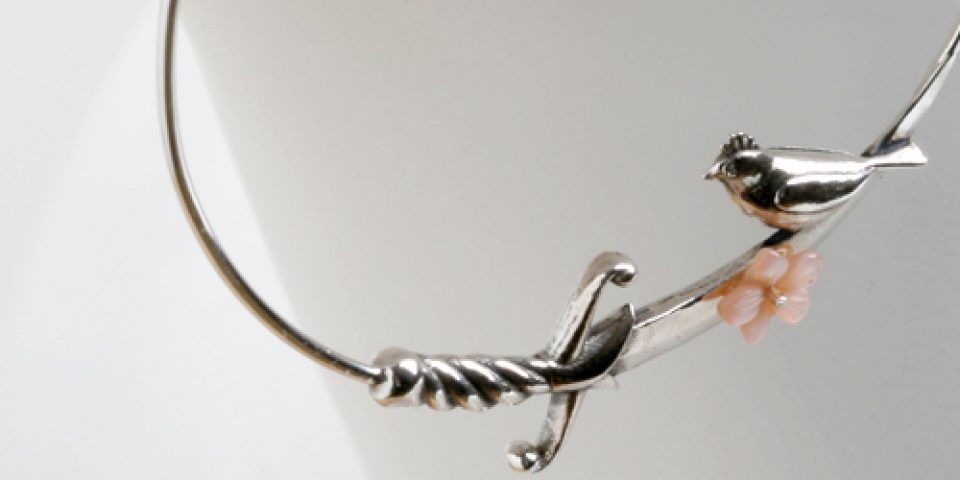
Stag

Featured

Posted by Andrew Nightingale in Questions in Logic

≈ Leave a comment

Tags

fantasy, fiction, poetry, writing

Nobody without a home, yet

another footprint on a world that needs nothing


A foothold I can call my own, a place that would forever accept my step
I wander on blank sheets of paper,

I wanted to write about that piece of empty space that is home to all

Dip the page in water, they say, and let the ink run by itself.
A paper vase with animals primitively drawn 
Turning the vase in my hands, the animals run, bleeding, until the vase contains something.
(Write something into the vase)
writing curled round its inner walls, saying “The truth is no-w-here.”

now I etch it in wood carvings

the medium of the woods I wandered 

on blank sheets of paper until
I was accepted into the Hall of Trees.


← Older posts

Subscribe

  • Entries (RSS)
  • Comments (RSS)

Archives

  • March 2026
  • January 2026
  • November 2025
  • August 2025
  • July 2025
  • May 2025
  • April 2025
  • March 2025
  • February 2025
  • January 2025
  • December 2024
  • November 2024
  • September 2024
  • June 2024
  • May 2024
  • April 2024
  • March 2024
  • February 2024
  • January 2024
  • December 2023
  • October 2023
  • September 2023
  • August 2023
  • July 2023
  • June 2023
  • May 2023
  • April 2023
  • March 2023
  • February 2023
  • January 2023
  • December 2022
  • November 2022
  • October 2022
  • September 2022
  • August 2022
  • July 2022
  • June 2022
  • May 2022
  • March 2022
  • January 2022
  • December 2021
  • November 2021
  • October 2021
  • September 2021
  • July 2021
  • March 2021
  • February 2021
  • January 2021
  • December 2020
  • October 2020
  • September 2020
  • August 2020
  • July 2020
  • June 2020
  • December 2019
  • October 2019
  • April 2019
  • March 2019
  • February 2019
  • November 2018
  • September 2018
  • September 2017
  • June 2017
  • May 2017
  • November 2016
  • October 2016
  • August 2016
  • July 2016
  • April 2016
  • June 2015
  • March 2015
  • February 2015
  • January 2015
  • November 2014
  • September 2014
  • August 2014

Categories

  • AI summaries of Nightingale108
  • Questions in Logic
  • Questions in Mathematics
  • The more technical stuff

Meta

  • Create account
  • Log in

Blog at WordPress.com.

  • Subscribe Subscribed
    • Questions Are Power
    • Already have a WordPress.com account? Log in now.
    • Questions Are Power
    • Subscribe Subscribed
    • Sign up
    • Log in
    • Report this content
    • View site in Reader
    • Manage subscriptions
    • Collapse this bar